
As I stirred the vibrant, glossy noodles in my skillet, the enticing aroma brought back the joy of family gatherings around a table filled with delicious dishes. Japchae, a beloved Korean stir-fry, is my go-to meal when I crave something warm and comforting. This recipe showcases sweet potato glass noodles, tender proteins, and a rainbow of vegetables, all drenched in a savory soy and sesame sauce. Not only is Japchae incredibly versatile—allowing for additions like chicken, tofu, or a touch of spice with gochujang—but it’s also a gluten-free delight that everyone can enjoy. Whether you’re preparing a cozy dinner for two or serving a crowd, this dish promises to be a crowd-pleaser. Are you ready to bring a taste of Korea to your kitchen?
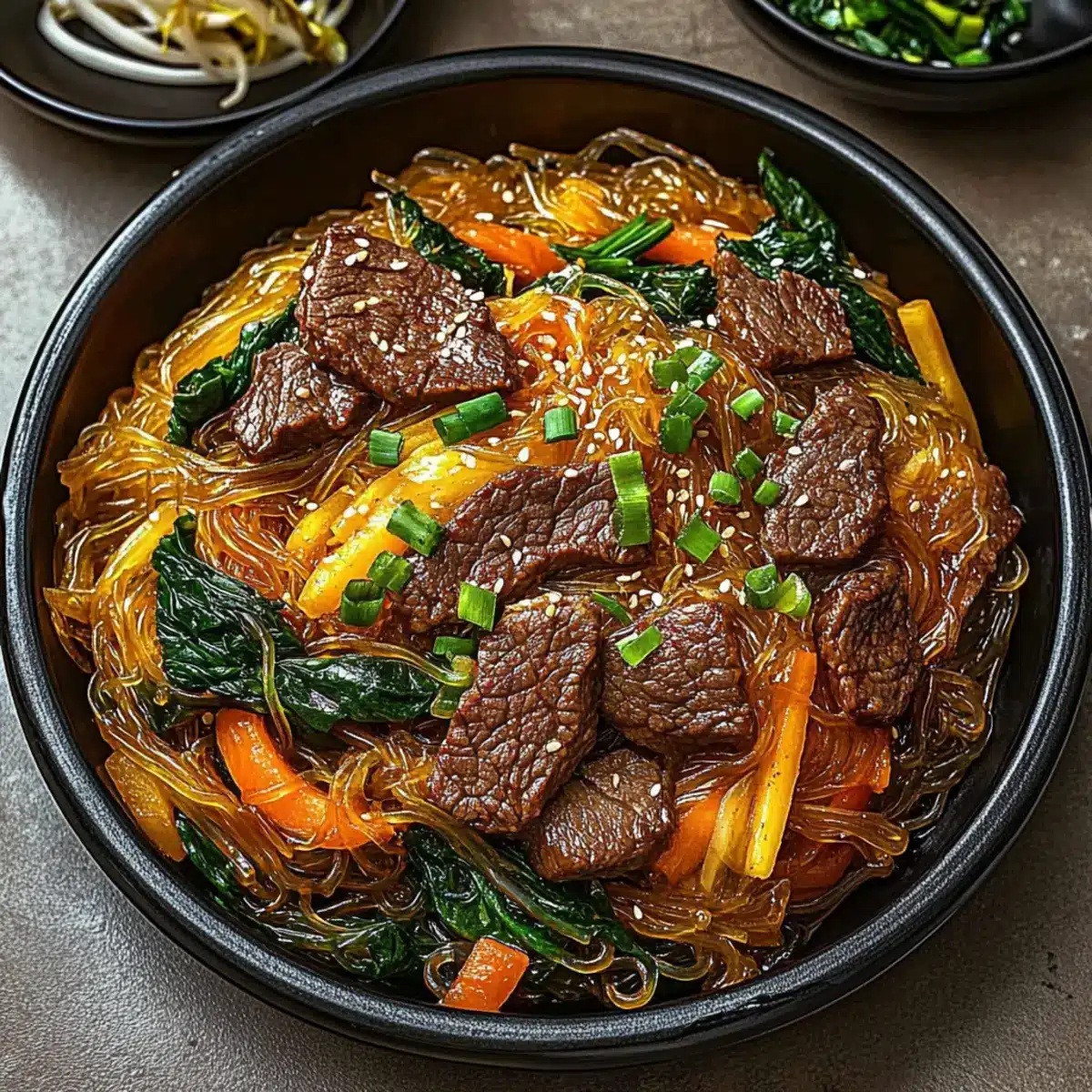
Why is Japchae so popular?
Irresistible Texture: Japchae features sweet potato noodles that provide a unique chewy bite, making each mouthful delightful.
Flavor Explosion: The combination of savory soy sauce and aromatic sesame oil creates a rich flavor profile that’s both comforting and satisfying.
Versatile Cooking: Customize your Japchae by adding chicken, tofu, or seasonal vegetables, perfect for personal tastes or dietary preferences.
Quick and Easy: With just six simple steps, you can whip up this dish in under an hour, ideal for any weeknight meal.
Cultural Delight: Traditionally served during celebrations, Japchae brings a warm sense of community to your dinner table. Adjust to your liking and create nutritious versions that everyone will love!
Japchae Ingredients
For the Noodles
• Sweet Potato Glass Noodles (Dangmyeon) – Essential for authenticity, these noodles provide a chewy texture and slight sweetness that make Japchae unique.
For the Protein
• Beef (or Chicken/Tofu) – Choose tender cuts for the beef or customize with chicken or tofu for a delicious protein source that suits everyone.
For the Vegetables
• Carrots – Adds vibrant color and a slight sweetness; julienne for an appealing presentation.
• Bell Peppers – Provides crunch and a pop of color; any variety will work well.
• Spinach – Adds greenery and nutrition; fresh spinach wilts beautifully when sautéed.
For the Sauce
• Soy Sauce – The backbone of flavor; opt for low-sodium varieties for a healthier choice while keeping the savory profile.
• Sesame Oil – Introduces rich depth; can be substituted with olive oil if desired for a milder flavor.
For Garnish
• Green Onions – A fresh, crunchy topping that offers a mild onion flavor; chives can also be used as a pleasant alternative.
Feel free to explore your creative side with this Japchae recipe, ensuring that every bite is bursting with love and flavor!
Step‑by‑Step Instructions for Japchae
Step 1: Prepare Noodles
Begin by soaking sweet potato glass noodles (Dangmyeon) in hot water for 20-30 minutes until they become soft and pliable. You’ll know they’re ready when they are translucent and easily bendable. Once softened, drain the noodles well and set them aside; they will absorb the flavors beautifully when combined with the other ingredients.
Step 2: Cook Protein
In a large skillet or wok, heat a tablespoon of oil over medium-high heat. Add your sliced beef (or chosen protein) and stir-fry for about 3-5 minutes, or until browned and fully cooked. Ensure the pieces are separated for even cooking. Once done, remove the beef from the skillet and set it aside in a separate bowl, allowing the flavors to mingle.
Step 3: Sauté Vegetables
In the same skillet, add another splash of oil if necessary and toss in your sliced vegetables, such as carrots, bell peppers, and spinach. Stir-fry the veggies over medium heat for about 3-4 minutes, just until they become tender-crisp and vibrant in color. This quick cooking time will preserve their nutrients and ensure a delightful texture in your Japchae.
Step 4: Combine Ingredients
Return the cooked noodles to the skillet with the sautéed vegetables. Add the cooked protein back into the mix and gently toss everything together to combine. The goal is to evenly distribute the noodles, veggies, and protein, creating a beautiful medley of flavors and textures that define your savory Japchae.
Step 5: Season
Pour in your soy sauce and sesame oil over the noodle mixture. Stir well to incorporate these savory elements, ensuring that every ingredient is coated and flavors meld together. Continue to cook for an additional 2-3 minutes, allowing the Japchae to heat through and absorb the sauce, infusing it with rich, savory tastes.
Step 6: Garnish and Serve
Once the Japchae is well combined and heated through, remove the skillet from the heat. Top with freshly chopped green onions for a burst of flavor and color. Serve your delicious Japchae hot or at room temperature, showcasing its inviting glossy appearance. Enjoy this comforting dish that brings the flavors of Korea right to your table!
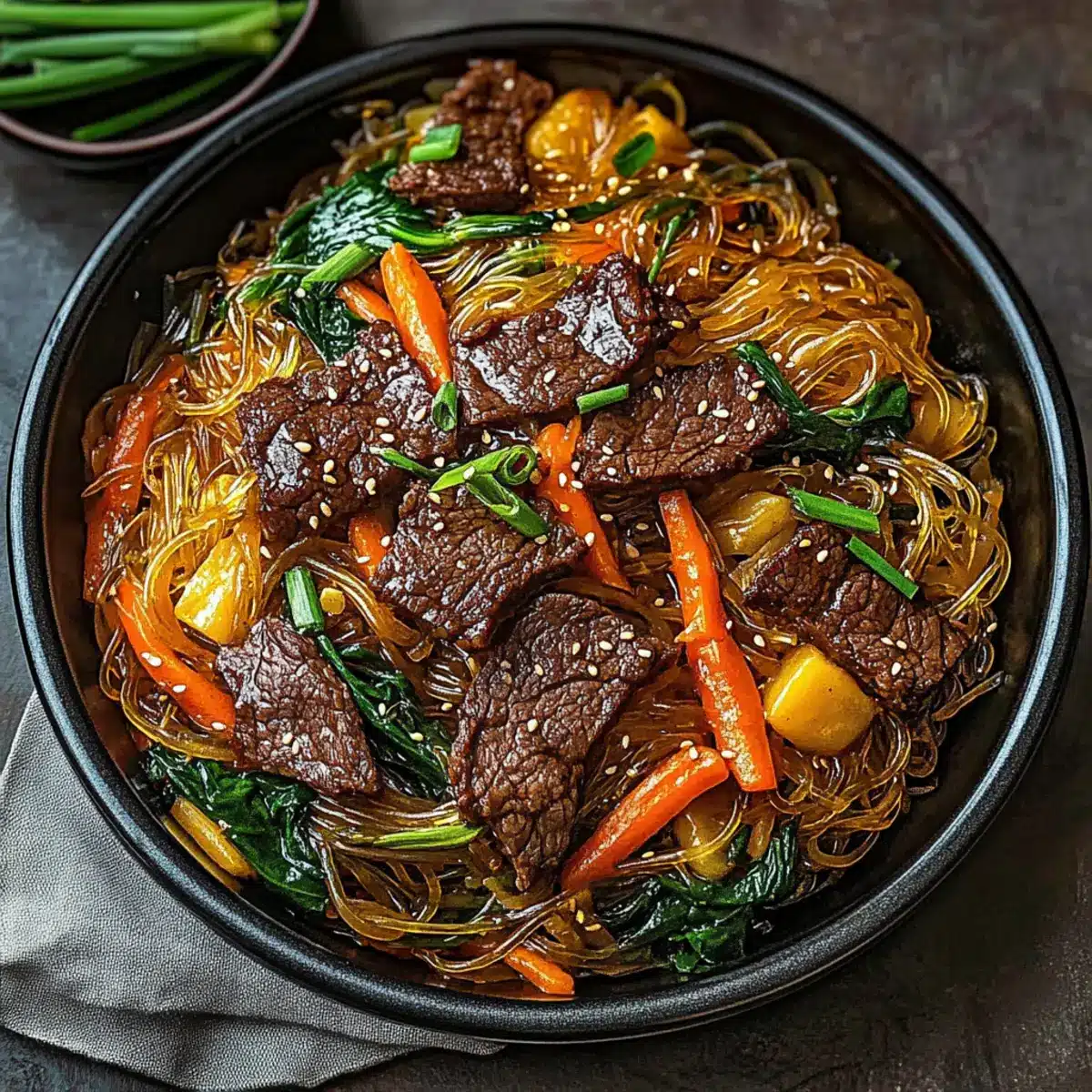
Japchae Variations & Substitutions
Feel free to play with flavors and ingredients to create your perfect Japchae experience!
- Dairy-Free: Substitute sesame oil with olive oil for a lighter touch while maintaining delicious depth.
- Spicy Kick: Add a tablespoon of gochujang during the seasoning stage for a savory heat that awakens your taste buds.
- Veggie Boost: Toss in seasonal veggies like zucchini or bok choy to elevate color and texture in your dish.
- Gluten-Free: Confirm your soy sauce is gluten-free, or try tamari to keep the rich flavors without the gluten.
- Protein Remix: Experiment with shrimp or a blend of tofu and chickpeas for a satisfying seafood or plant-based twist.
- Crisp Delight: Top your Japchae with a handful of roasted peanuts or sesame seeds for added crunch and nutty flavor.
- Caramelized Touch: Sauté the onions until golden brown before adding them to enhance their sweetness and depth.
- Fresh Herbs: Sprinkle freshly chopped cilantro or Thai basil just before serving for a fragrant touch that brightens the dish.
No matter its form, your Japchae will bring warmth and joy to any meal shared with loved ones, reminiscent of community gatherings that celebrate togetherness!
Expert Tips for Japchae
• Noodle Soaking: Ensure you soak the sweet potato noodles long enough; under-soaked noodles won’t achieve that perfect chewy texture.
• Don’t Overcook Veggies: Stir-fry your vegetables until tender-crisp to retain their vibrant colors and nutrients; overcooked veggies can turn mushy.
• Protein Choice: If using chicken or tofu, ensure they are cubed evenly for consistent cooking and incorporated harmoniously into the Japchae.
• Adjust Seasoning: Taste before serving and adjust your soy sauce according to preference; remember that the ideal balance of flavors enhances this classic dish.
• Make-Ahead Delight: Japchae can be prep-ahead, stored in the fridge, and reheated gently, keeping its flavor intact for busy weekdays.
Make Ahead Options
Preparing Japchae in advance is a fantastic way to save time during busy weeknights! You can soak the sweet potato noodles up to 24 hours in advance; simply drain and store them in an airtight container in the refrigerator. For the vegetables, chop and refrigerate them up to 3 days ahead; this keeps them fresh while saving you precious prep time. When you’re ready to enjoy your Japchae, quickly sauté your prepped vegetables and protein, add in the noodles, and drizzle with soy sauce and sesame oil. This method ensures your dish is just as delicious, allowing the flavors to blend beautifully while reducing your cooking time significantly!
What to Serve with Authentic Japchae?
Savor the versatile flavors of Japchae with delightful accompaniments that elevate your dining experience.
- Steamed Rice: A timeless pairing, providing a neutral base that contrasts beautifully with the savory noodles.
- Korean Fried Chicken: Crunchy and flavorful, this dish’s spiciness complements the mild sweetness of Japchae, creating a happy harmony.
- Pickled Vegetables: Fermented carrots or radish add a crisp, tangy crunch, offsetting the richness of the stir-fried noodles.
- Spinach Salad: Fresh, lightly dressed greens bring a refreshing, vibrant lift to the hearty Japchae, balancing flavors wonderfully.
- Miso Soup: A warm, umami-rich broth that warms the soul; its depth contrasts nicely with the chewy noodles.
- Cucumber Kimchi: Offering a spicy, crunchy bite, this dish adds a delightful zing and enhances the overall experience.
- Fruit Dessert: Finish off with something sweet like mango or melon for a fresh, juicy end to your meal.
- Green Tea: Light and soothing, this beverage pairs well with the savory notes of Japchae, guiding you through the meal’s flavors seamlessly.
How to Store and Freeze Japchae
Fridge: Store leftover Japchae in an airtight container for up to 3 days. This keeps it fresh and ready for a quick meal!
Freezer: Freeze Japchae in a freezer-safe container for up to 2 months. Thaw overnight in the refrigerator before reheating.
Reheating: When you’re ready to enjoy it again, reheat gently in a pan with a splash of water to restore moisture and flavor.
Make-Ahead: Japchae is perfect for meal prepping; prepare it in advance and store it for easy, nutritious meals throughout the week!
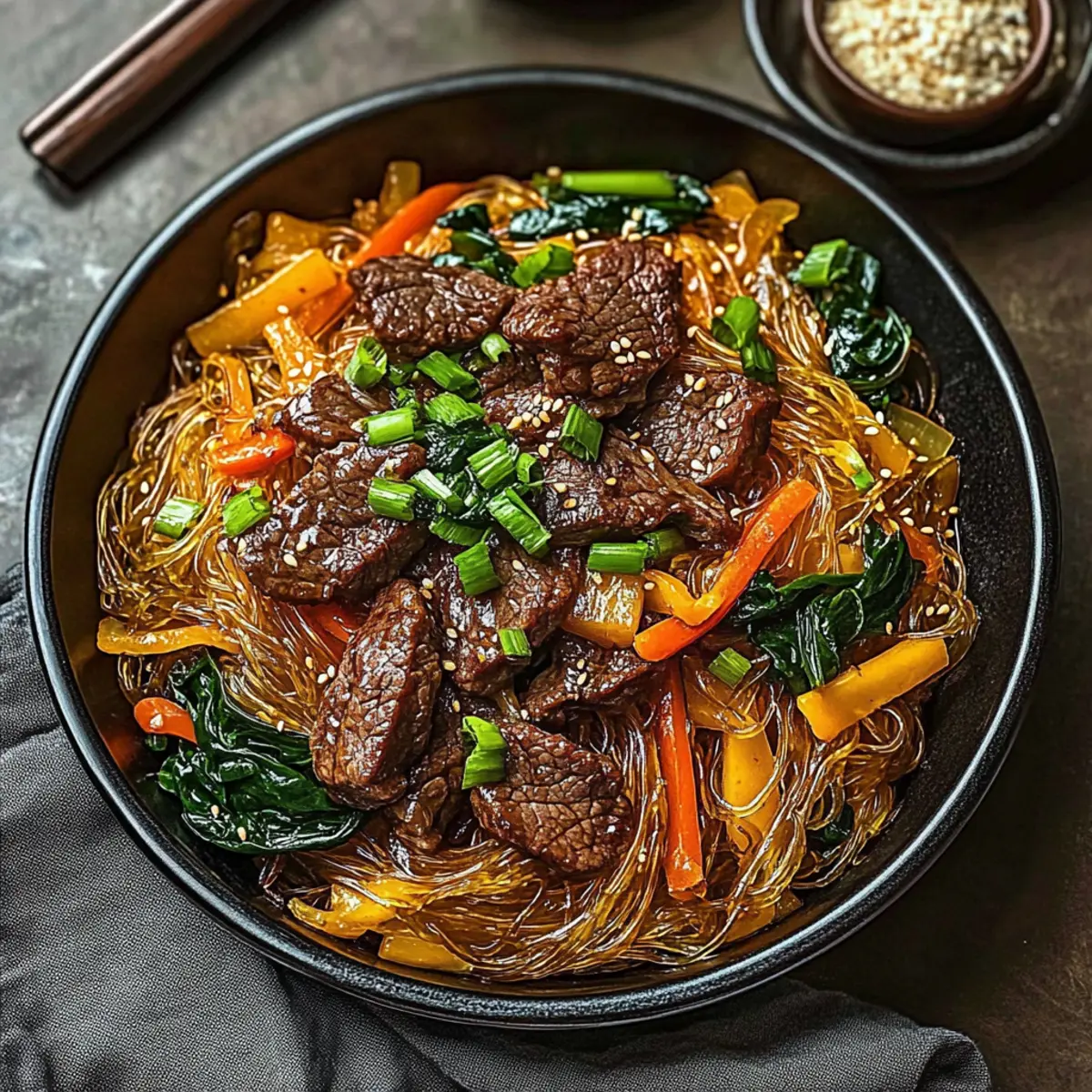
Japchae Recipe FAQs
What type of sweet potato glass noodles should I use for Japchae?
Absolutely! For authenticity, you should use sweet potato glass noodles known as Dangmyeon. These noodles provide the signature chewy texture and slight sweetness that make Japchae special. Feel free to check the package for gluten-free labels if that’s a concern for you.
How long can I store leftover Japchae in the fridge?
You can store leftover Japchae in an airtight container in the refrigerator for up to 3 days. When you’re ready to enjoy it again, just reheat gently in a pan with a splash of water to keep it moist and flavorful!
Can I freeze Japchae for later use?
Yes, you can freeze Japchae! Place it in a freezer-safe container and it will last for up to 2 months. When ready to eat, simply thaw it in the refrigerator overnight, and to reheat, warm it in a pan with a splash of water to revive its delicious texture.
What should I do if my vegetables become mushy during cooking?
The more the merrier with fresh veggies! To avoid mushiness, be sure to stir-fry your vegetables on medium-high heat for about 3-4 minutes only, until they are tender-crisp. If they start looking dark or limp, remove them from the heat immediately. This preserves their color and nutrients.
Is Japchae suitable for people with gluten allergies?
Absolutely! Japchae’s sweet potato glass noodles are gluten-free, making it a fantastic choice for anyone with gluten sensitivities. Just be mindful of your soy sauce; opt for gluten-free soy sauce to ensure the entire dish remains gluten-friendly.
Can I customize the protein in my Japchae?
Very much so! You can easily substitute the beef with chicken, tofu, or even shrimp depending on your preferences. Just remember to cut your protein into evenly-sized pieces for consistent cooking and to ensure they marry well with the rest of the ingredients. Enjoy creating your perfect bowl of Japchae!
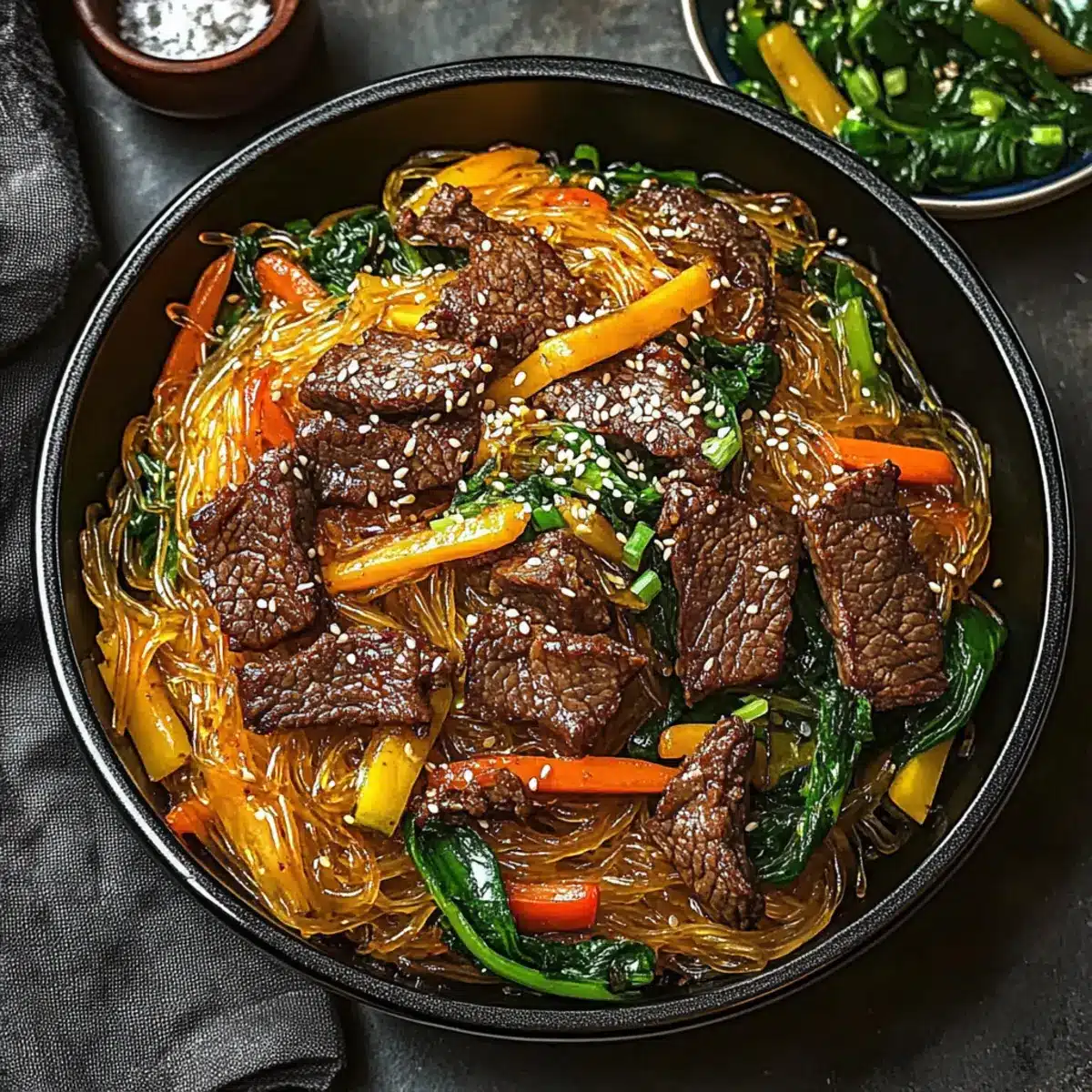
Savory Japanese Japchae: Chewy Noodles You’ll Love
Ingredients
Equipment
Method
- Soak sweet potato glass noodles in hot water for 20-30 minutes until soft and translucent.
- Heat oil in a skillet. Stir-fry sliced beef for 3-5 minutes until browned and cooked. Set aside.
- In the same skillet, stir-fry sliced vegetables for 3-4 minutes until tender-crisp.
- Return cooked noodles and protein to the skillet, toss to combine everything evenly.
- Add soy sauce and sesame oil, stir well and cook for an additional 2-3 minutes.
- Garnish with chopped green onions and serve hot or at room temperature.
Leave a Reply