
As the frosty breath of winter wraps around us, it’s time to gather in the warmth of our kitchens and embrace comfort food like never before. My Hearty Korean Winter Soup is more than just a meal; it’s a hug in a bowl, crafted with tender beef brisket and vibrant vegetables simmered to perfection in a richly spiced broth. This Korean soup not only nourishes the body but also the soul, making it a fantastic addition to your recipe repertoire for chilly evenings. The delightful blend of flavors is sure to impress friends and family, yet the prep is quick and fuss-free. Who wouldn’t want a cozy family dinner that delivers warmth and satisfaction? So, are you ready to dive into a heartwarming experience this winter?
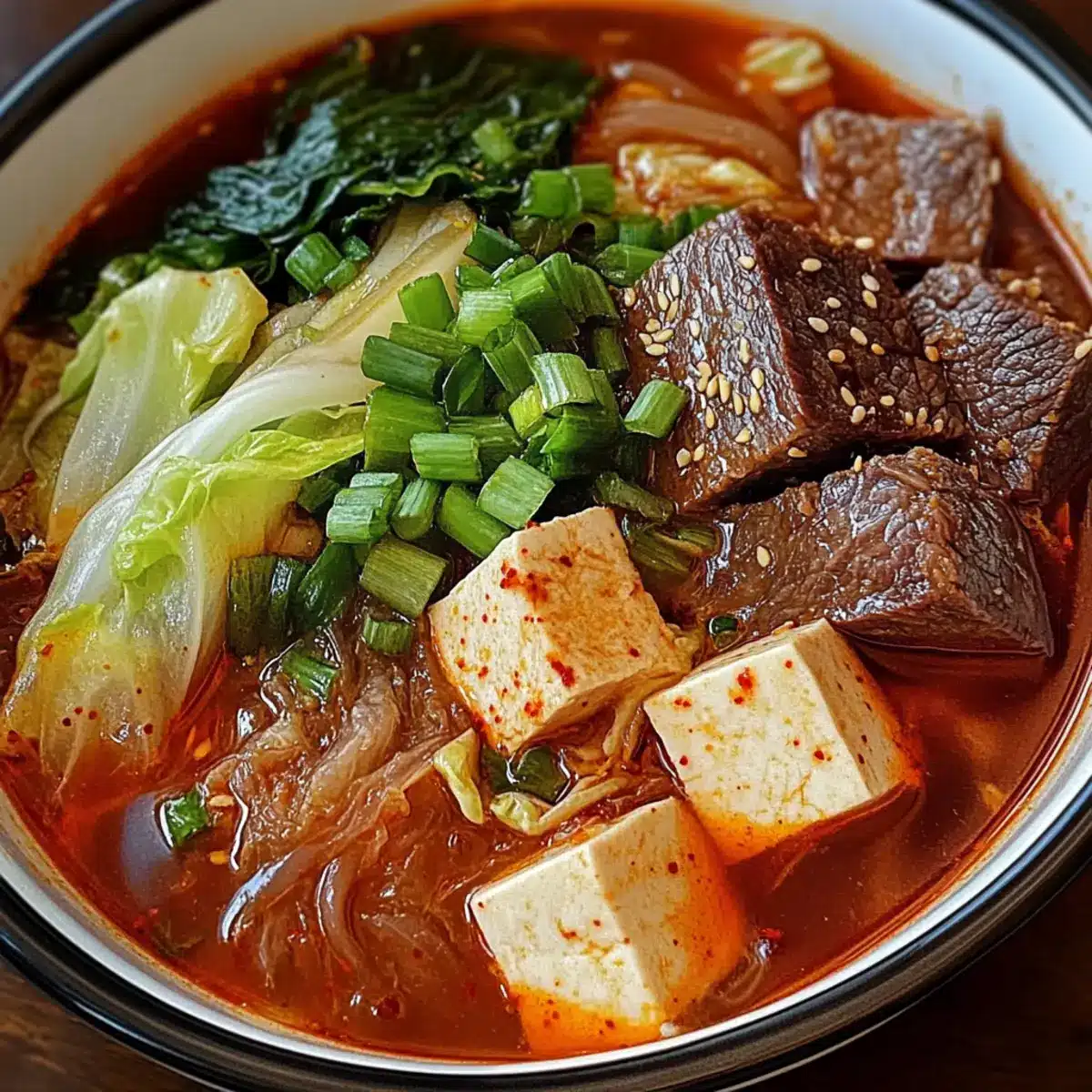
Why is Korean Winter Soup so comforting?
Hearty Nourishment: Each bowl is a warm embrace, packed with tender beef and nourishing veggies, perfect for chilly nights.
Rich, Flavorful Broth: The combination of gochujang and soy sauce gives this soup a depth of flavor that keeps you coming back for more.
Quick Preparation: With simple steps and minimal fuss, you can have this delicious Korean soup on the table in no time.
Versatile Ingredients: Feel free to mix in seasonal vegetables like zucchini or even tofu for added texture.
Family Favorite: This comforting dish is sure to please everyone at the table, making it an ideal choice for winter gatherings or cozy dinners.
Korean Winter Soup Ingredients
For the Soup
- Beef Brisket – Provides robust beefy essence; choose a marbled cut for optimal flavor. Alternative: Chuck roast or short ribs for similar results.
- Water – The base of the broth; essential for simmering the brisket.
- Soy Sauce – Adds salty umami depth; balances sweetness in the Korean Winter Soup.
- Gochujang (Korean red pepper paste) – Offers a spicy-sweet kick and vibrant color; substitute with a mix of miso and chili powder for different flavor.
- Gochugaru (Korean red pepper powder) – Imparts smoky heat; can be swapped for crushed red pepper flakes.
- Garlic – Infuses the soup with aromatic depth; use minced for best results.
- Onion – Sweetens the broth and enhances overall flavor; chop larger.
- Napa Cabbage – Adds texture and mild crunch; slice thinly to soften in broth.
- Firm Tofu – Cubed for protein and creaminess; absorbs broth flavors well.
- Daikon Radish – Provides a gentle sweetness and crisp texture; slice for even cooking.
- Salt and Pepper – Season to taste; adjust for depth and flavor balance.
For the Garnish
- Sesame Oil – Used for sautéing; boosts nutty aroma; heat lightly before adding green onions.
- Green Onions – Fresh garnish; adds color and flavor at the end of cooking.
For Serving
- Steamed White Rice – Served on the side; absorbs flavorful broth and enriches each serving.
Step‑by‑Step Instructions for Korean Winter Soup
Step 1: Prepare the Broth
In a large pot, combine the beef brisket with enough water to cover it completely. Bring it to a rolling boil over high heat, then reduce the heat to medium-low. Let it simmer uncovered for about 30 minutes until the brisket is tender and easily pierced with a fork, releasing its rich flavors into the broth.
Step 2: Clear the Surface
As the broth simmers, use a ladle or skimmer to carefully remove any impurities or foam that rise to the surface. This step is important to maintain a clear and appealing broth for your Korean Winter Soup. Take your time to ensure it’s clean, which will enhance the soup’s overall presentation and taste.
Step 3: Add the Flavors
Next, stir in the soy sauce, gochujang, gochugaru, and minced garlic into the simmering broth. Mix well to ensure that the chili paste fully dissolves and the flavors meld together beautifully. Allow it to cook for an additional 5 minutes over low heat, filling your kitchen with a delightful aroma that indicates richness ahead.
Step 4: Incorporate the Vegetables
Add chopped onion, sliced napa cabbage, cubed tofu, and daikon radish to the pot. Gently stir to combine all the ingredients well, then cover the pot and let it simmer for another 20 minutes. The vegetables should become tender but still vibrant, bringing a burst of color to your Korean Winter Soup.
Step 5: Sauté the Garnish
While your soup is simmering, heat a small pan over medium heat and add a drizzle of sesame oil. Sauté the sliced green onions for about 2-3 minutes, until they soften and become fragrant. This step enhances the flavor profile and gives your soup an aromatic boost just before serving.
Step 6: Final Seasoning Adjustments
At this point, taste your Korean Winter Soup and adjust the seasoning with salt and pepper. Stir gently to incorporate, aiming for a balanced flavor that perfectly complements the heat from the gochujang and the sweetness from the vegetables. Let it simmer for a few minutes longer to allow the flavors to harmonize.
Step 7: Serve and Enjoy
Ladle the Korean Winter Soup into warm bowls and serve immediately alongside steamed white rice. The rice soaks up the delicious broth, creating a comforting and hearty meal for your chilly evenings. Enjoy the warm embrace of this soul-satisfying dish surrounded by family and friends.
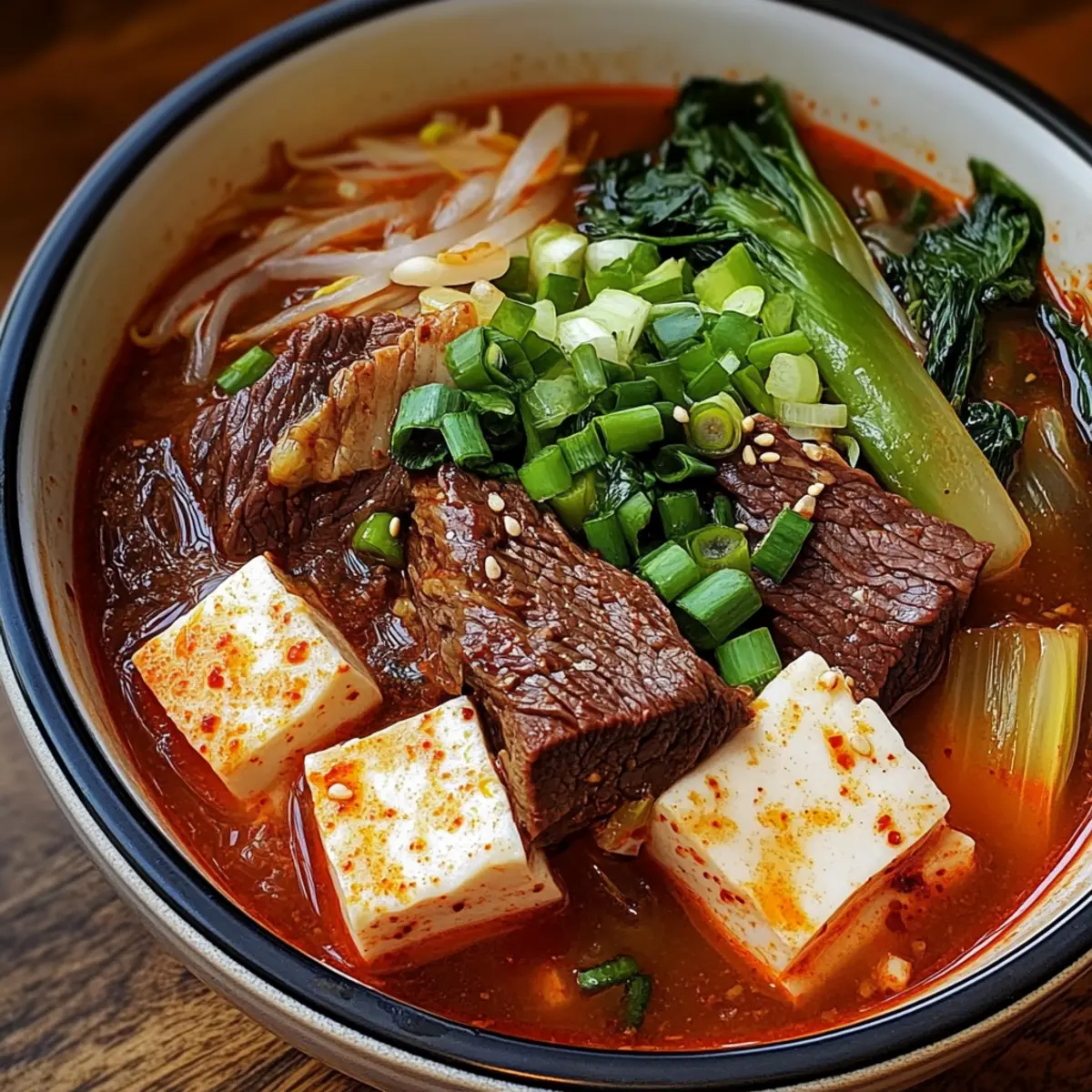
Make Ahead Options
These hearty Korean Winter Soup ingredients are perfect for meal prep enthusiasts! You can prepare the broth and any vegetables, like the napa cabbage and daikon radish, up to three days in advance. Simply cook the beef brisket and simmer everything together as instructed, then allow it to cool completely before refrigerating in an airtight container. To maintain quality and flavor, be sure to wait to add the sautéed green onions and seasonings until just before serving. When you’re ready to enjoy your comforting Korean Winter Soup, simply reheat it gently on the stovetop, stir, and serve it alongside freshly steamed rice for a wholesome winter meal that saves you time and effort.
What to Serve with Hearty Korean Winter Soup
Elevate your dining experience with sides that beautifully complement the rich, warming flavors of this soul-satisfying dish.
- Steamed White Rice: A classic pairing that absorbs the flavorful broth, enhancing every spoonful of soup, creating a perfect harmony.
- Crunchy Kimchi: The tangy and spicy fermented vegetables add a zesty crunch that contrasts beautifully with the soup’s softness.
- Savory Pancakes: Korean-style scallion pancakes provide a delightful crunch, offering a delicious contrast to the tender ingredients in the soup.
- Crispy Fried Tofu: Adding an extra crispy texture not only enhances the dish but also keeps it light and satisfying, enhancing its heartiness.
- Roasted Root Vegetables: Sweet and caramelized, they offer a heartwarming sweetness and comfort that echoes the nourishing feel of the soup.
- Seaweed Salad: Light and refreshing, it brings a hint of oceanic flavor and a crunchy texture, balancing the soup’s deep, rich broth.
- Chilled Soybean Sprouts: These provide a cool, crisp texture that brightens the overall meal and refreshes the palate for the next warm bite.
- Sweet and Zesty Citrus Salad: A mix of oranges or tangerines adds a refreshing brightness and counteracts the savory richness, creating a wholesome balance.
Variations & Substitutions for Korean Winter Soup
Feel free to explore these delightful twists to make this Korean Winter Soup your own masterpiece!
- Dairy-Free: Swap the beef brisket for mushrooms like shiitake or portobello for a rich umami flavor that even non-meaters will love.
- Vegetable Boost: Add seasonal veggies like zucchini, carrots, or kale for an extra nutrition punch. Their natural sweetness pairs perfectly with the savory broth.
- Spicy Kick: Enhance the heat by including sliced fresh chilies or a few extra teaspoons of gochugaru; perfect for those who crave a fiery touch!
- Gluten-Free: Use tamari instead of soy sauce; it offers the same depth without the gluten. Your soup will still possess its hearty essence.
- Slow Cooker Version: For a hands-free option, prepare everything in a slow cooker. Set it on low for 6-8 hours for tender beef and flavorful broth that’s even better the next day!
- Add Noodles: Introduce your favorite type of noodle, such as udon or rice noodles, during the last few minutes of cooking for a heartier meal. Just be sure to adjust cooking times for tenderness.
- Seafood Twist: For a unique variation, add shrimp or mussels instead of beef; this lightens up the dish with ocean flavors while still keeping it cozy.
- Herb Infusion: Toss in a couple of sprigs of fresh cilantro or a bay leaf during cooking for an aromatic lift. A little fresh greenery at the end will also brighten up your bowl.
These variations not only allow you to customize the flavor and texture but also encourage creativity in your kitchen! If you’re intrigued by seasonal ingredients, consider throwing in some veggies from a hearty mix like in my Vegetable Soup Hearty, or for dessert, surprise your family with some delightful Yakgwa Korean Honey cookies afterward!
How to Store and Freeze Korean Winter Soup
Fridge: Store your Korean Winter Soup in an airtight container for up to 3 days. Allow it to cool completely before sealing to maintain freshness.
Freezer: This hearty soup can be frozen for up to 3 months. Portion it into freezer-safe bags or containers, ensuring you leave some space for expansion when freezing.
Reheating: Thaw overnight in the fridge and reheat on the stovetop over medium heat, adding a splash of water if needed to restore its original consistency.
Leftovers: Any leftover ingredients should be included in the soup’s storage as it reheats beautifully, intensifying the comforting flavors with each serving.
Expert Tips for Korean Winter Soup
- Choose Quality Beef: Select a well-marbled beef brisket for a richer flavor; tough cuts won’t break down as nicely in the warm broth.
- Control Spiciness: Adjust the proportions of gochujang and gochugaru to modify the spice level; start with less if you’re sensitive to heat.
- Skim for Clarity: Regularly skim off impurities during simmering to keep your broth clear and appetizing; a clean look enhances your Korean winter soup’s appeal.
- Vegetable Variations: Feel free to mix seasonal veggies; adding ingredients like zucchini or leafy greens can elevate the nutritional value without compromising flavor.
- Make Ahead: Prepare your soup a day in advance for deeper flavor; refrigerate overnight and gently reheat before serving for the best taste experience.
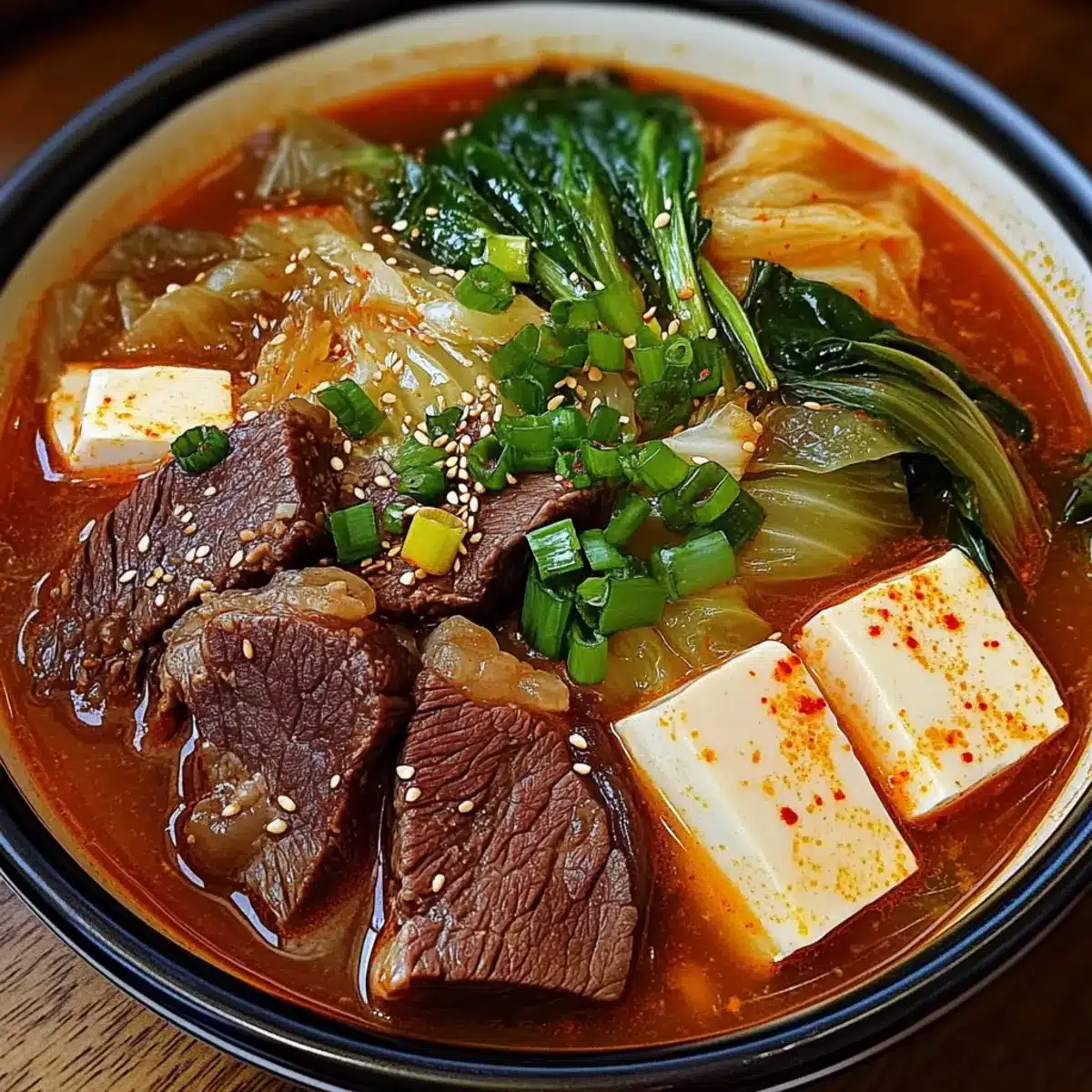
Korean Winter Soup Recipe FAQs
How do I select the best beef for Korean Winter Soup?
Absolutely! When choosing beef brisket, look for a well-marbled cut, as the fat will melt into the broth, enriching the flavor. Avoid lean cuts which may lack tenderness. Alternatively, you can use chuck roast or short ribs for a similar delicious result!
What’s the best way to store leftover Korean Winter Soup?
Very! Store your soup in an airtight container in the fridge for up to 3 days. Make sure it cools completely before sealing to keep it fresh. If you’re not eating it right away, consider freezing it for up to 3 months, which is great for meal prep!
Can I freeze Korean Winter Soup? How should I do it?
Of course! To freeze your Korean Winter Soup, allow it to cool completely, then ladle it into freezer-safe bags or containers. Be sure to leave some space for the soup to expand as it freezes. Seal tightly and label with the date. When you’re ready to enjoy it again, thaw it overnight in the fridge and reheat on the stovetop!
What ingredients might alter the flavor profile too much?
I often recommend being cautious with spice levels. If you find gochujang and gochugaru too intense, especially if you have guests who may not enjoy heat, reduce the amounts or replace them with milder seasonings like sweet paprika and a hint of cayenne for warmth without overwhelming spice.
Is there anything I should avoid if I have food allergies?
Absolutely! If you have allergies, be cautious with ingredients like soy sauce, as it contains gluten. Opt for gluten-free soy sauce instead. Additionally, if you’re allergic to tofu or soy, consider adding chickpeas or shredded chicken for protein without the soy allergy risk. Always double-check ingredients when you’re serving guests or family with allergies!
What’s the best way to ensure my soup has a clear broth?
Great question! To achieve a clear broth for your Korean Winter Soup, regularly skim off any foam and impurities that rise to the surface while simmering. Use a ladle or skimmer to carefully remove these particles before adding other ingredients. This keeps your soup looking and tasting pure, enhancing the overall presentation!
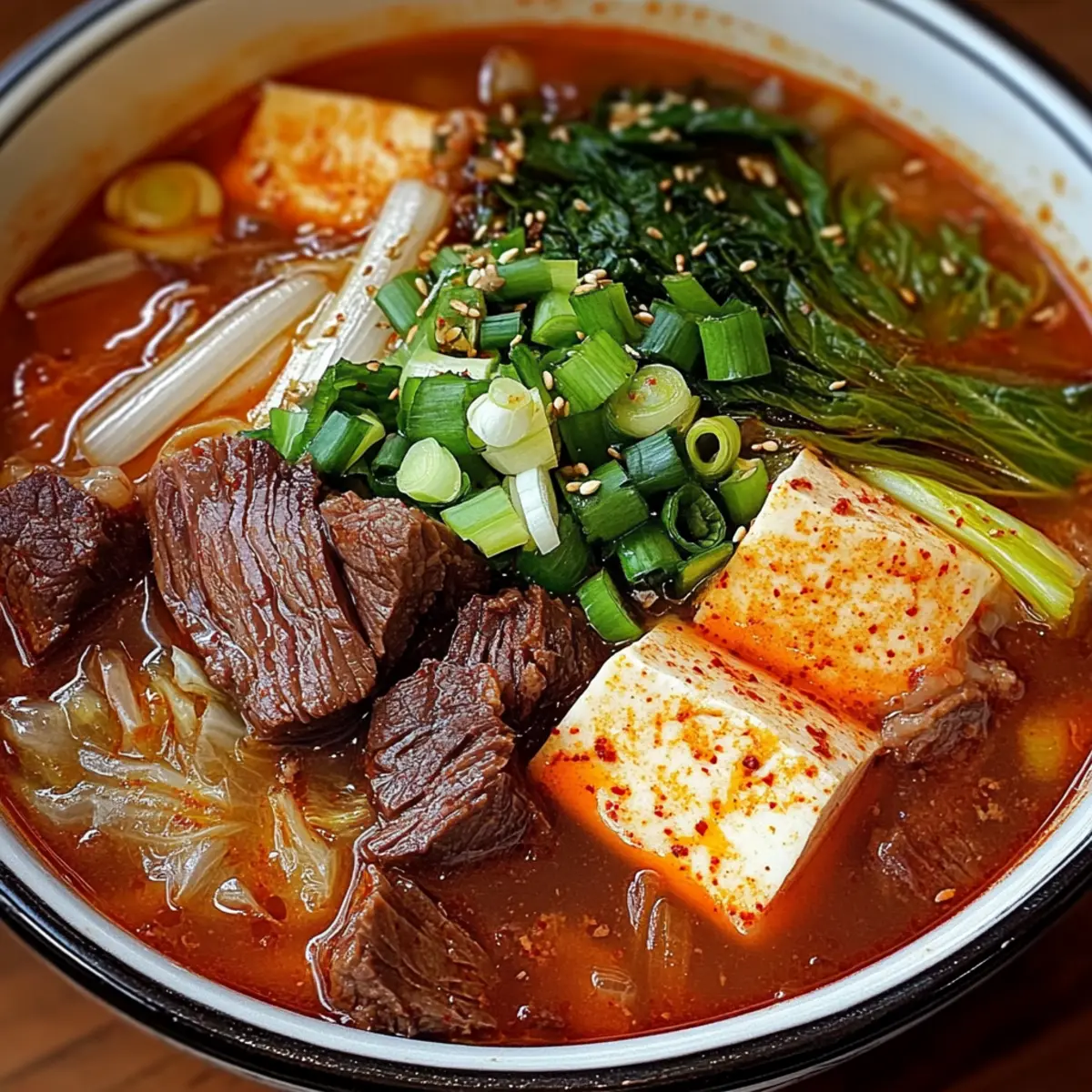
Cozy and Comforting Korean Winter Soup for Chilly Nights
Ingredients
Equipment
Method
- In a large pot, combine the beef brisket with enough water to cover it completely. Bring it to a rolling boil over high heat, then reduce the heat to medium-low. Let it simmer uncovered for about 30 minutes until the brisket is tender and easily pierced with a fork, releasing its rich flavors into the broth.
- As the broth simmers, use a ladle or skimmer to carefully remove any impurities or foam that rise to the surface.
- Next, stir in the soy sauce, gochujang, gochugaru, and minced garlic into the simmering broth. Mix well to ensure that the chili paste fully dissolves and the flavors meld together beautifully. Allow it to cook for an additional 5 minutes over low heat.
- Add chopped onion, sliced napa cabbage, cubed tofu, and daikon radish to the pot. Gently stir to combine all the ingredients well, then cover the pot and let it simmer for another 20 minutes.
- While your soup is simmering, heat a small pan over medium heat and add a drizzle of sesame oil. Sauté the sliced green onions for about 2-3 minutes, until they soften and become fragrant.
- At this point, taste your Korean Winter Soup and adjust the seasoning with salt and pepper. Stir gently to incorporate.
- Ladle the Korean Winter Soup into warm bowls and serve immediately alongside steamed white rice.
Leave a Reply